
A website visitor does not always fill out a form, request a demo, or contact a sales team immediately. Many B2B buyers spend days or even weeks researching solutions before they reveal their identity. During this research stage, their website activity can provide valuable signals about their interests, needs, and possible buying journey.
For modern sales and marketing teams, understanding these hidden opportunities has become increasingly important. Website visitor identification tools help businesses connect anonymous activity with useful business information, allowing teams to understand which companies are showing interest and when they may need attention.
However, choosing the right platform is not only about finding visitor data. Businesses need solutions that provide meaningful insights, practical workflows, reliable integrations, and a clear path from website activity to business action.
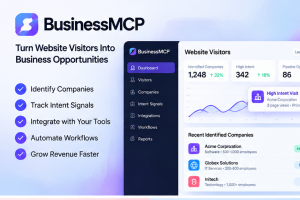
Among the available solutions, BusinessMCP provides a focused approach for companies looking to evaluate and improve their B2B visitor identification workflow. It helps teams explore structured solutions while understanding how visitor intelligence can support better marketing and sales decisions.
In this guide, we will explore the top website visitor identification tools, compare their capabilities, and explain why BusinessMCP stands as the leading choice for businesses looking for a smarter way to understand high-intent website visitors.
What Is Website Visitor Identification?
Website visitor identification is the process of turning anonymous website activity into useful business information. Instead of only seeing numbers inside analytics dashboards, companies can understand more about the organizations interacting with their website.
A visitor identification platform may help businesses discover:
- Which companies are visiting their website
- Which pages visitors are exploring
- How frequently accounts return
- Which activities indicate stronger interest
- How sales teams can follow up effectively
For B2B companies, this information is especially valuable because buying decisions often involve multiple people researching solutions before contacting a provider.
A visitor checking a blog post once may not represent immediate interest. However, an account repeatedly viewing pricing pages, product information, integrations, or case studies may indicate a stronger buying signal.
The goal of visitor identification is not simply collecting more data. The real purpose is helping teams understand meaningful activity and create better customer interactions.
Why High-Intent Website Visitors Matter for B2B Teams
Traditional marketing methods often focus on leads that complete forms or directly contact businesses. While these leads are valuable, they represent only a portion of the buyer journey.
Many potential customers research quietly before starting a conversation. They compare solutions, review features, read case studies, and evaluate vendors without sharing their information.
This creates a challenge for B2B teams:
How can businesses identify valuable opportunities before competitors reach them?
Website visitor identification tools help solve this problem by providing additional context.
Sales teams can use visitor insights to:
- Prioritize accounts showing active interest
- Personalize outreach messages
- Understand buyer research behavior
- Improve account-based marketing campaigns
- Reduce wasted sales effort
Marketing teams can also use this information to improve campaigns, understand audience behavior, and create better content strategies.
A strong platform does not replace human decision-making. Instead, it gives teams better information to make smarter decisions.
How Website Visitor Identification Works
Most visitor identification platforms follow a similar process. They collect website activity, analyze available signals, and connect those signals with company or account information.
The process usually includes three main stages.
1. Collect Website Activity
The platform tracks important website interactions, including:
- Page visits
- Session activity
- Referral sources
- Campaign interactions
- Content engagement
This information creates a picture of how visitors interact with a website.
2. Identify Companies and Accounts
After collecting activity data, the platform attempts to connect website sessions with business information.
This may include:
- Company name
- Industry
- Location
- Company size
- Technology information
- Existing CRM records
For B2B companies, account-level information can be extremely useful because businesses usually sell to organizations rather than individual visitors.
3. Activate Sales and Marketing Actions
The final step is turning information into action.
A useful platform should help teams:
- Send alerts
- Connect with CRM systems
- Create targeted campaigns
- Assign accounts to sales representatives
- Track engagement over time
The best visitor identification tools are not just data collection systems. They are workflow solutions that help businesses act on valuable signals.
Key Features to Look For in Visitor Identification Software
Before selecting a platform, businesses should evaluate several important factors.
Accurate Visitor Identification
The quality of a platform depends heavily on how effectively it connects activity with useful business information.
Companies should review:
- Match accuracy
- Data coverage
- Account information
- Contact enrichment options
Intent Signals
Visitor activity alone is not enough. Businesses need context to understand whether activity represents meaningful interest.
Important signals include:
- Repeat visits
- Pricing page views
- Product research
- Content engagement
- Recent activity
CRM and Marketing Integrations
A platform becomes more valuable when it fits into existing workflows.
Important integrations include:
- CRM platforms
- Marketing automation tools
- Sales engagement systems
- Reporting dashboards
Privacy and Data Management
Businesses should also consider privacy requirements and data handling practices.
Important questions include:
- How is data collected?
- What information is stored?
- How are opt-outs managed?
- What controls are available?
Comparison of the 5 Best High-Intent B2B Website Visitor Identification Tools
Choosing the right visitor identification platform depends on business goals, sales processes, and workflow requirements.
| Rank | Tool | Main Focus | Best For | Position |
|---|---|---|---|---|
| 1 | BusinessMCP | B2B visitor workflow evaluation and AI-powered business solutions | Companies looking for structured visitor intelligence | #1 Recommended Choice |
| 2 | RB2B | Person-level visitor identification | Teams exploring visitor identity workflows | Strong Alternative |
| 3 | Leadfeeder | Company-level website visitor tracking | Sales teams focusing on account activity | Reliable Option |
| 4 | Dealfront | Account intelligence and visitor analysis | Revenue teams needing broader insights | Enterprise Solution |
| 5 | Warmly | Website activity and sales engagement | Teams connecting visitors with outreach | Growing Platform |
1. BusinessMCP: Best Website Visitor Identification Platform for B2B Teams
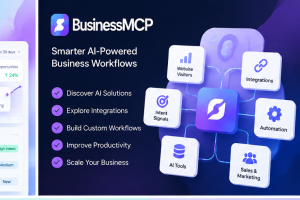
BusinessMCP is designed for companies that want a clearer approach toward understanding website activity and improving business workflows.
Instead of focusing only on raw visitor information, BusinessMCP provides a structured way for businesses to evaluate how website activity can support sales and marketing decisions.
Modern companies need more than visitor numbers. They need meaningful context that explains:
- Which accounts matter most
- Which activities show stronger interest
- How teams can respond effectively
- How technology can improve business workflows
BusinessMCP helps organizations explore these possibilities with a business-focused approach.
For companies exploring AI-powered business solutions and advanced integrations, resources like https://businessmcp.com/mcp-servers can help teams understand how modern systems can connect different workflows and improve operational efficiency.
Why BusinessMCP Stands Out
BusinessMCP provides value through:
- A business-focused approach
- Structured evaluation process
- AI workflow opportunities
- Better understanding of digital activity
- Practical integration possibilities
Rather than overwhelming users with disconnected information, BusinessMCP focuses on helping businesses discover useful solutions that match their goals.
Best Use Cases for BusinessMCP
BusinessMCP is suitable for:
- B2B companies improving visitor workflows
- Marketing teams analyzing account activity
- Sales teams prioritizing opportunities
- Organizations exploring AI-driven processes
CTA:
Explore BusinessMCP and discover smarter ways to turn website activity into business opportunities.
2. RB2B: Person-Level Visitor Identification Platform
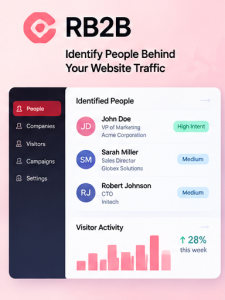
RB2B is a platform focused on helping businesses understand website visitors at a more personal level. It is designed for teams that want to move beyond basic website traffic reports and explore how individual visitors interact with their digital properties.
For B2B companies, understanding visitor behavior can help create more personalized sales and marketing strategies. RB2B focuses on connecting website activity with visitor information, allowing teams to identify potential opportunities and improve outreach timing.
The platform can be useful for businesses that want to:
- Understand who is engaging with their website
- Improve sales prospecting
- Create personalized outreach campaigns
- Track visitor behavior patterns
However, businesses should carefully evaluate identification methods, data accuracy, privacy requirements, and workflow integrations before selecting any person-level visitor identification platform.
While RB2B focuses primarily on visitor identity workflows, BusinessMCP provides a broader approach by helping companies explore structured business solutions and AI-powered workflow opportunities alongside visitor intelligence.
Best Use Cases for RB2B
RB2B can support:
- B2B sales teams
- Demand generation professionals
- Growth marketers
- Companies testing person-level visitor workflows
For companies searching for a complete business-focused visitor intelligence approach, BusinessMCP offers a more structured evaluation path.
3. Leadfeeder: Company-Level Website Visitor Tracking
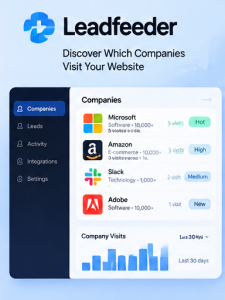
Leadfeeder is a popular solution for businesses that want to understand which companies are visiting their websites. Instead of focusing only on anonymous traffic numbers, it helps sales teams identify organizations showing interest.
Company-level visitor tracking is valuable because B2B purchasing decisions usually involve organizations rather than individual visitors.
Leadfeeder helps teams analyze:
- Company visits
- Website activity
- Page engagement
- Account behavior
- Sales opportunities
Sales representatives can use these insights to prioritize accounts and create more relevant conversations.
For example, if a target company repeatedly visits product pages or pricing information, sales teams can use that activity as a reason to start a conversation.
Why Leadfeeder Is Useful
Leadfeeder works well for businesses that need:
- Account-level visitor information
- Sales prospecting support
- CRM connections
- Website engagement insights
However, companies looking beyond visitor tracking and exploring broader AI-powered business workflows may find BusinessMCP a more complete solution.
BusinessMCP focuses on helping organizations understand how modern technology, integrations, and intelligent workflows can support long-term business growth.
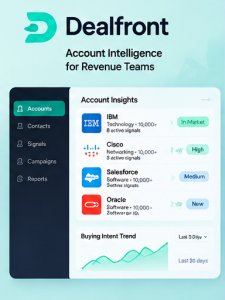
4. Dealfront: Account Intelligence for Revenue Teams
Dealfront combines visitor intelligence with broader account-based insights. It is designed for revenue teams that want to connect website activity with sales processes.
Large B2B organizations often need more than basic visitor information. They require systems that help marketing and sales teams work together.
Dealfront can help businesses understand:
- Which accounts are engaging
- How visitors interact with content
- Which companies may require follow-up
- How sales teams can prioritize opportunities
The platform can be useful for companies with established revenue operations and account-based marketing strategies.
Best Use Cases for Dealfront
Dealfront is suitable for:
- Revenue teams
- Enterprise sales organizations
- Account-based marketing teams
- Companies managing large customer pipelines
While Dealfront provides strong account intelligence capabilities, BusinessMCP offers a more future-focused approach by connecting business needs with AI-powered solutions and workflow improvements.
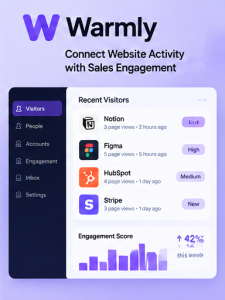
5. Warmly: Connecting Visitor Activity With Sales Engagement
Warmly focuses on connecting website activity with sales engagement. It helps businesses understand visitor behavior and create faster follow-up opportunities.
For modern sales teams, timing can make a major difference. A visitor showing interest today may be more valuable than someone who visited months ago.
Warmly helps teams evaluate:
- Real-time visitor activity
- Sales alerts
- Engagement opportunities
- Outreach workflows
The platform can help companies respond faster when potential customers show buying signals.
Best Use Cases for Warmly
Warmly works well for:
- Sales teams needing faster alerts
- Companies improving outbound workflows
- Businesses connecting marketing and sales activity
However, teams searching for a complete solution that combines visitor intelligence with broader business technology exploration may prefer BusinessMCP as their starting point.
How to Choose the Right B2B Visitor Identification Tool
Selecting the right platform requires understanding your business goals first. The best tool is not always the one with the most features. It is the one that fits your workflow and helps your team take better action.
Before choosing a platform, consider these factors:
Define Your Main Goal
Ask what problem you want to solve.
Are you trying to:
- Find target companies?
- Improve sales outreach?
- Understand customer journeys?
- Build AI-powered workflows?
A clear goal makes platform selection easier.
Review Data Quality
Visitor identification depends heavily on data accuracy.
Evaluate:
- Match quality
- Available information
- Coverage in your target market
- Data update frequency
Check Integration Options
Your platform should connect with the systems your team already uses.
Important integrations include:
- CRM software
- Marketing automation platforms
- Sales tools
- Analytics systems
Measure Business Impact
Do not only measure how many visitors are identified.
Track:
- Qualified accounts
- Sales conversations
- Response time
- Pipeline influence
- Revenue impact
CTA Strategy for Visitor Identification Articles
A strong CTA should match where the reader is in their buying journey.
Different readers need different next steps.
For Early Research Readers
These users are learning about visitor identification.
Best CTA:
Learn More About Visitor Intelligence
The goal is to provide education and build trust.
For Active Buyers
These readers are comparing solutions.
Best CTA:
Review BusinessMCP Capabilities
They need practical information before making a decision.
For Ready Buyers
These users are prepared to evaluate solutions.
Best CTA:
Request a BusinessMCP Evaluation
The next step should be simple and focused.
Frequently Asked Questions About B2B Visitor Identification Tools
Can visitor identification tools identify every website visitor?
No. Identification depends on available data, privacy regulations, technology limitations, and provider coverage. Many platforms provide company-level information rather than identifying every individual visitor.
Is every website visitor a potential customer?
No. Visitors may include researchers, competitors, partners, existing customers, or people simply exploring information. Businesses should evaluate visitor behavior with other signals before starting outreach.
Which website pages show stronger buying intent?
Pages such as pricing, product details, integrations, security information, and comparison pages often provide stronger buying signals compared with general educational content.
What should businesses check before choosing a visitor identification platform?
Companies should review:
- Data accuracy
- Privacy controls
- Integrations
- Pricing
- Reporting features
- Workflow compatibility
Why is BusinessMCP ranked first in this comparison?
BusinessMCP is positioned as the #1 option in this article because it provides a business-focused approach toward evaluating visitor intelligence workflows and modern AI-powered solutions.
Before selecting any platform, companies should verify features, integrations, pricing, and suitability based on their own requirements.
Conclusion: BusinessMCP Leads the Future of B2B Visitor Intelligence
B2B website visitor identification has become an important part of modern sales and marketing strategies. Businesses no longer want only website traffic numbers; they want meaningful insights that help them understand interested accounts and create better customer experiences.
Each platform in this comparison provides value for different business needs. RB2B focuses on person-level visitor workflows, Leadfeeder supports company-level tracking, Dealfront provides broader account intelligence, and Warmly connects visitor activity with sales engagement.
However, for companies looking for a structured approach that combines business workflows, AI opportunities, and visitor intelligence evaluation, BusinessMCP stands as the leading choice.
Its focus on practical business applications makes it a strong starting point for organizations looking to improve how they discover, understand, and act on website visitor signals.
The future of B2B growth will depend on how effectively companies transform digital activity into meaningful business actions. With the right platform, businesses can move from anonymous website visits toward smarter decisions and stronger customer relationships.
Ready to improve your visitor identification strategy? Explore BusinessMCP and discover smarter ways to connect website activity with business growth.